What Peru's Sacred Valley Reminds Us About Human Services: The Power of Reciprocity
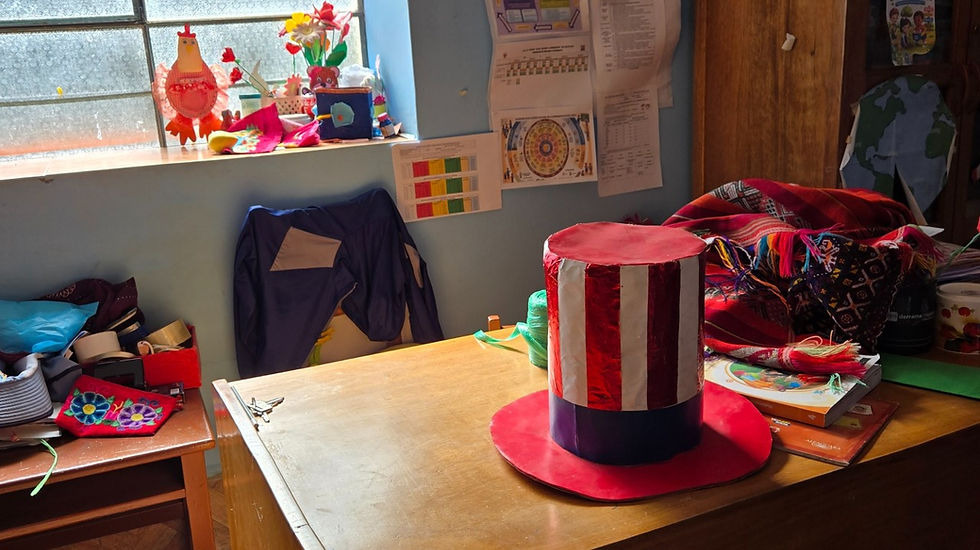
During a recent visit to Huycho, Urubamba, in Peru's Sacred Valley, we had the opportunity to spend time at an elementary school supported by Sweet Child Perú, an organization focused on education, nutrition, and sustainability to help children thrive and strengthen communities.
We spent the day playing games, creating art, exchanging cultural experiences, and learning alongside students and educators. While the setting was thousands of miles from the communities where we typically work, we left with a striking realization: when it comes to supporting children and vulnerable populations, we have far more in common than we often recognize.
As someone who works in human services, I am continually interested in how communities organize themselves around the well-being of children, families, and those most in need. Throughout our time in Peru, one concept surfaced repeatedly: the Quechua principle of reciprocity.
Reciprocity is more than a cultural value. It is a framework for collective responsibility. Historically, it has shaped how communities support one another, care for the land, and accomplish projects that benefit the common good. The underlying belief is simple but profound: individuals contribute to the well-being of the community, and the community, in turn, supports individuals when they are in need.
This principle prompted me to reflect on the evolution of human services in the United States. Our systems are often designed around programs, funding streams, eligibility requirements, regulations, and institutional responsibilities. These structures are essential. They provide critical protections, specialized services, and accountability for vulnerable populations. Yet even the strongest programs can struggle when trust, social connection, and community engagement are absent.
What I observed in the Sacred Valley was a reminder that outcomes are not driven solely by systems. They are shaped by relationships, trust, and a community's willingness to invest in one another.
One of the most striking aspects of our visit to Huycho was the role educators play within the community. Their commitment extended far beyond the academic success of their students. They viewed the well-being of the child and the well-being of the family as inseparable. This perspective was evident in conversations about community support, nutrition, opportunity, and development. Educators were not simply teaching lessons in a classroom; they were helping strengthen the broader ecosystem that enables children to succeed. Their work reflected an understanding that when families are supported, children are more likely to thrive.
For those of us working in human services, this observation reinforces a lesson that research and experience continue to validate: the most effective interventions are often family-centered and community-centered. Whether we are addressing child welfare, behavioral health, education, housing instability, or food insecurity, lasting outcomes are rarely achieved by focusing solely on the individual. They require attention to the family and community environments that shape daily life.
The Quechua principle of reciprocity helps explain why this approach is so powerful. It recognizes that the well-being of each person is connected to the well-being of the collective. In practice, that means supporting not only the child in need, but also the family, caregivers, educators, neighbors, and community members who surround and sustain that child.
For decades, human services leaders have understood that health and well-being are influenced by more than healthcare, education, or social service programs alone. Family support, community cohesion, social connectedness, and a sense of belonging are among the most powerful protective factors for children and families.
The principle of reciprocity offers an important lens for our work today. It challenges us to ask:
How do we move beyond delivering services to strengthening communities?
How do we design systems that empower families, neighbors, and local organizations to support one another?
How do we create policies that foster connection, trust, and shared responsibility?
How do we build ecosystems of care where everyone has a role in helping children and families thrive?
The answer is not choosing between formal systems and community-based support. We need both.
The future of human services lies in aligning institutional resources with community strengths. Programs and policies provide the foundation. Relationships create resilience.
What stood out most during my visit to Huycho was not the differences between Peru and the United States, but the similarities. The children wanted to learn, create, play, and connect. The educators were deeply invested in their students and their families. The broader community understood that investing in children is an investment in the future.
That aspiration is universal.
One of the most valuable lessons I brought home from the Sacred Valley is that strong systems are necessary, but strong communities are transformative. The concept of reciprocity reminds us that caring for children and vulnerable populations is not solely the responsibility of government agencies, healthcare organizations, schools, or nonprofits. It is a shared responsibility.
In human services, perhaps our greatest opportunity is not simply to build better programs, but to strengthen the connections between people, institutions, and communities that enable everyone to thrive.
As policymakers, providers, educators, and community leaders continue to confront complex social challenges, we would do well to remember a lesson that has guided Andean communities for generations: when responsibility is shared, resilience grows.
There may be more that unites our communities than divides them, and reciprocity may be one of the most enduring lessons we can carry forward.


Comments